







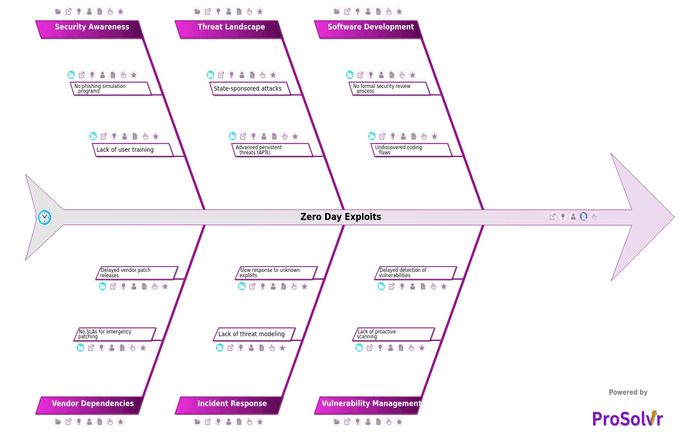
RCA of Zero Day Exploits
Zero day exploits target unknown software vulnerabilities before developers can release a security patch. These attacks may result from undiscovered coding flaws, inadequate code testing, or the absence of a formal security review process. When security is not prioritized within the software development life cycle, weaknesses can remain hidden until attackers exploit them. State sponsored attacks, nation state cyberwarfare, and advanced persistent threats make these vulnerabilities especially dangerous because highly skilled adversaries can bypass traditional security controls, steal sensitive data, and disrupt critical operations.
Effective vulnerability management can reduce the risks associated with zero day exploits. Organizations need proactive scanning, regularly updated scanning tools, and real time threat intelligence to identify unusual activity. Delayed detection of vulnerabilities often occurs when security teams lack current threat information or cannot recognize novel exploit behavior. Vendor dependencies can increase the risk further. Delayed vendor patch releases and the absence of service level agreements for emergency patching may prevent organizations from responding quickly when a new vulnerability is discovered.
A strong incident response strategy must include threat modeling and a predefined handling process for unknown exploits. Without these measures, teams may respond slowly or fail to understand how an attacker entered the environment. Security awareness is also essential. Regular user training and phishing simulation programs can reduce accidental actions that trigger malicious code or expose systems to attack. After containment, Root Cause Analysis helps teams investigate the technical, process, people, vendor, and management factors that allowed the security incident to occur.
ProSolvr combines Gen AI with fishbone diagram based Root Cause Analysis to support structured cybersecurity investigations. Teams can examine coding flaws, vulnerability management gaps, threat intelligence failures, incident response weaknesses, security awareness issues, and vendor dependencies in one collaborative environment. ProSolvr helps cybersecurity, engineering, quality, and leadership teams identify deeper causes, document evidence, and develop effective corrective and preventive actions. This structured approach helps organizations move beyond immediate recovery, strengthen security controls, improve emergency patching processes, and reduce the risk of future zero day exploits.
Who can learn from the Zero Day Exploits template?
- Software Developers: Developers gain insight into how design and coding decisions can inadvertently introduce critical vulnerabilities. RCA helps them understand the importance of integrating secure coding practices throughout the development lifecycle.
- Cybersecurity Teams: Security professionals learn how layered defenses can still be bypassed by unknown threats and how to build resilience against future exploits. RCA equips them to design more robust detection and response strategies.
- IT Management and Leadership: By reviewing RCA outcomes, IT leaders understand how strategic gaps in process or oversight can increase organizational risk. This allows them to prioritize security investments and implement systemic changes.
- Incident Response Teams: RCA provides response teams with a clearer picture of operational blind spots and helps refine their protocols. It ensures they are better prepared for handling similar threats more effectively in the future.
- Third-Party Vendors and Partners: Vendors can see how their service levels or patching timelines impact the security of their clients. RCA encourages them to adopt more proactive and collaborative security practices.
- Compliance and Risk Officers: These professionals use RCA findings to reassess organizational risk profiles and compliance adherence. It helps them recommend policy updates and ensure alignment with evolving security standards.
Why use this template?
By translating scattered post-mortem observations into a structured RCA framework, ProSolvr ensures that problem-solving becomes proactive and systemic rather than reactive and fragmented. While zero day exploits present unpredictable and severe risks, a GEN-AI powered RCA system using a Six Sigma fishbone approach enables organizations to transform chaotic breach responses into structured, long-term security improvements.
Use ProSolvr by smartQED to effectively and efficiently solve problems in your organization.


