







Root Cause Analysis of Transit Damages in Automobile Industry
Transit damages refer to physical damage sustained by vehicles during transportation from manufacturing plants to dealerships, warehouses, or customers. These damages can result in significant financial losses due to repair costs, delays, customer dissatisfaction, and reputational harm. Frequent incidents can also disrupt supply chains, impacting overall distribution efficiency.
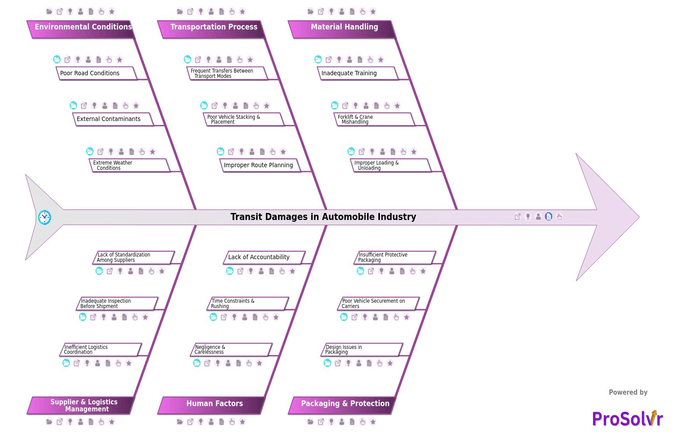
The root causes of transit damages stem from multiple factors. Material handling issues, such as inexperienced forklift or crane operators, improper loading techniques, and lack of standardized procedures, often lead to physical damage. Poor vehicle securement on carriers, including loose strapping, inadequate restraints, and substandard protective materials, further exacerbates the problem. Improper route planning, where vehicles are transported over rough or poorly maintained roads, increases the risk of structural stress and damage. Additionally, external environmental conditions, such as extreme temperatures, heavy rain, and road contaminants, can contribute to corrosion and material degradation during transit.
Once transit damage occurs, resolving the issue requires a structured Root Cause Analysis (RCA) approach. Traditional methods often rely on manual inspections and fragmented data, leading to inconsistent conclusions and recurring issues. AI-powered RCA applications like ProSolvr revolutionize this process by providing a visual, structured, and data-driven approach. By integrating fishbone diagrams based on Six Sigma principles, ProSolvr enables manufacturers and logistics teams to systematically trace damages back to their source, ensuring a comprehensive and repeatable resolution process.
What sets ProSolvr apart is its AI-driven visual analytics, which go beyond traditional RCA tools. ProSolvr’s intuitive interface allows users to collaboratively map out potential failure points, visualize how various factors—such as handling errors, poor packaging, or road conditions—interconnect, and prioritize corrective actions based on real-world impact. This structured yet flexible approach ensures that automotive manufacturers and logistics providers can systematically reduce transit damages, optimize transportation processes, and strengthen supply chain reliability.
Who can use the Transit Damages in Automobile Industry template?
- Logistics & Supply Chain Managers: They oversee the transportation of vehicles and ensure that damages are minimized. By using the template, they can identify issues such as inefficient logistics coordination, frequent transfers between transport modes, and poor route planning, helping improve shipping practices and reduce transit-related damage.
- Quality Assurance & Inspection Teams: These teams are responsible for inspecting vehicles before and after transit. The template helps them analyze causes such as inadequate inspection before shipment, lack of final quality control, and failure to check for pre-existing damages, leading to more effective inspection protocols.
- Automobile Manufacturers: Vehicle manufacturers can use the template to assess recurring transit damage affecting their products. By identifying root causes such as design issues in packaging, incompatibility with transport modes, and poor vehicle securement on carriers, they can improve packaging and handling standards.
- Third-Party Logistics (3PL) & Transport Providers: These organizations manage the physical transportation of vehicles. The template helps them identify issues such as forklift & crane mishandling, inexperienced operators, and manual handling errors, enabling better training, standardized procedures, and safer handling practices.
- Dealerships & Vehicle Distributors: Since dealerships receive vehicles from manufacturers, they can use the template to monitor damage trends and improve accountability across the supply chain. It helps address issues such as poor communication between stakeholders and lack of responsibility tracking for transit damages.
- Insurance & Risk Management Teams: These teams evaluate transit-related risks and process damage claims. The template helps them determine whether damages stem from environmental conditions, improper vehicle stacking, or negligence, supporting more accurate claim assessments and stronger risk mitigation strategies.
Why use this template?
ProSolvr’s AI-driven Visual RCA uncovers hidden correlations in transit damage incidents, providing structured, data-backed insights for effective corrective actions. Unlike traditional methods, ProSolvr automates RCA workflows using fishbone diagrams and Six Sigma principles, ensuring a systematic resolution process.
For instance, if manual handling errors persist, ProSolvr can pinpoint links to inadequate training and poor supervision, guiding targeted CAPA strategies that minimize future damage. By streamlining investigations, ProSolvr helps organizations reduce transit risks, enhance efficiency, and build a damage-free supply chain.
Use ProSolvr by smartQED to effectively minimize risks in your automobile plants.


