






ProSolvr logo

Resolve problems, permanently

Substandard Raw Materials Root Cause Analysis

Root Cause Analysis of Substandard Raw Materials

The use of substandard materials in automotive manufacturing poses serious risks to vehicle safety, durability, and overall performance. These issues often stem from inconsistent sourcing, where frequent supplier changes and a lack of long-term contracts result in fluctuating material quality. Weak supplier audits—including infrequent inspections and failure to enforce corrective actions—allow low-quality materials to enter the supply chain. Additionally, unreliable vendors prioritizing cost over quality or lacking a structured supplier qualification process further compromise component integrity, increasing the likelihood of defects, recalls, and safety hazards.

Raw material quality is a critical failure point that requires systematic analysis. Undetected use of recycled or lower-grade materials, lack of purity verification, and contamination during transit due to poor handling introduce unseen weaknesses in automotive components. Material inconsistencies caused by inadequate testing or the use of non-standard compositions further lead to unpredictable performance failures. Without a structured root cause analysis (RCA) approach, these defects continue to surface, leading to escalating warranty claims and reputational damage.

Beyond raw materials, manufacturing and handling processes play a major role in quality failures. Cross-contamination during processing, caused by improper material segregation or insufficient cleaning, alters material integrity. Poor handling due to untrained personnel and lack of standardized procedures increases defect rates. Inefficient manufacturing practices, such as improper equipment calibration and inadequate quality controls, create recurring production issues that standard inspections often miss.

This is where ProSolvr’s Gen AI-powered RCA methodology makes a difference. By integrating Six Sigma-driven fishbone analysis, ProSolvr helps manufacturers systematically investigate supplier inconsistencies, raw material defects, and process inefficiencies. Instead of relying on reactive solutions, ProSolvr enables manufacturers to document findings, implement corrective actions, and prevent repeat failures. With ProSolvr’s advanced RCA framework, automotive companies can strengthen supplier accountability, enhance material quality controls, and optimize manufacturing processes—leading to reduced recalls, increased reliability, and long-term operational excellence.

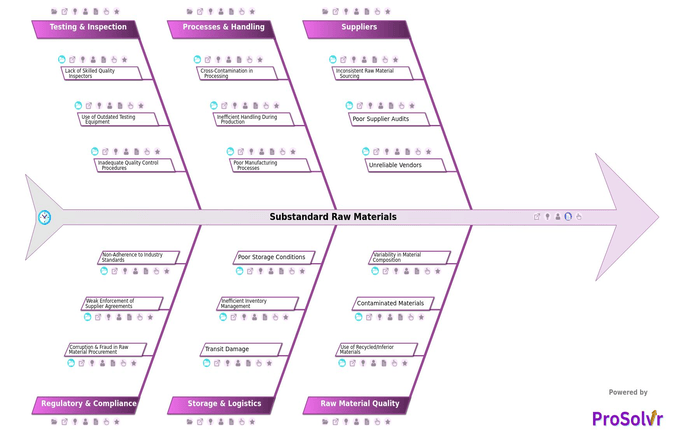
Substandard Raw Materials

    • Suppliers
      • Inconsistent Raw Material Sourcing
        • No long-term supplier contracts
        • Changing suppliers frequently
      • Poor Supplier Audits
        • Lack of corrective action for past non-conformance
        • Infrequent or ineffective audits
      • Unreliable Vendors
        • Choosing low-cost suppliers over quality
        • Lack of supplier qualification process
    • Raw Material Quality
      • Use of Recycled/Inferior Materials
        • No verification of material purity
        • Mixing with lower-grade materials
      • Contaminated Materials
        • Lack of quality control during transit
        • Improper handling at the supplier site
      • Variability in Material Composition
        • Lack of proper testing at the source
        • Use of non-standard materials
    • Processes & Handling
      • Cross-Contamination in Processing
        • No segregation of raw materials
        • Inadequate cleaning between material batches
      • Inefficient Handling During Production
        • Lack of trained personnel
        • Mishandling of fragile materials
      • Poor Manufacturing Processes
        • Improper calibration of equipment
        • Lack of standard operating procedures (SOPs)
    • Storage & Logistics
      • Transit Damage
        • Rough handling by logistics providers
        • Poor packaging during transportation
      • Inefficient Inventory Management
        • No FIFO (First In, First Out) system
        • Use of expired or outdated materials
      • Poor Storage Conditions
        • Improper stacking leading to damage
        • Exposure to moisture or extreme temperatures
    • Testing & Inspection
      • Lack of Skilled Quality Inspectors
        • High workload leading to inspection errors
        • Inadequate training on defect identification
      • Use of Outdated Testing Equipment
        • No regular calibration of testing equipment
        • Lack of investment in modern testing tools
      • Inadequate Quality Control Procedures
        • Insufficient sampling methods
        • No strict incoming material inspection
    • Regulatory & Compliance
      • Corruption & Fraud in Raw Material Procurement
        • Forged material certification documents
        • Bribery influencing material selection
      • Weak Enforcement of Supplier Agreements
        • Lack of supplier accountability
        • No penalties for non-conformance
      • Non-Adherence to Industry Standards
        • No regular updates to compliance policies
        • Lack of awareness of latest regulations

Suggested Actions Checklist

Here are some corrective actions, preventive actions and investigative actions that organizations may find useful:

    • Suppliers
      • Inconsistent Raw Material Sourcing
        • Corrective Actions:
          • Establish long-term contracts; standardize supplier selection criteria.
        • Preventive Actions:
          • Develop a strategic sourcing plan; evaluate supplier stability before switching.
        • Investigative Actions:
          • Analyze supplier history; review past sourcing disruptions.
      • Poor Supplier Audits
        • Corrective Actions:
          • Implement a structured corrective action plan for non-conformance; increase audit frequency.
        • Preventive Actions:
          • Establish strict supplier compliance benchmarks; ensure follow-ups on audit findings.
        • Investigative Actions:
          • Review past audit results; assess gaps in current supplier evaluation methods.
      • Unreliable Vendors
        • Corrective Actions:
          • Phase out low-quality suppliers; implement stricter vendor approval criteria.
        • Preventive Actions:
          • Introduce a vendor qualification process; conduct background checks before selection.
        • Investigative Actions:
          • Analyze past supplier failures; evaluate cost vs. quality impact.
    • Raw Material Quality
      • Use of Recycled/Inferior Materials
        • Corrective Actions:
          • Reject non-compliant materials; enforce strict material verification.
        • Preventive Actions:
          • Implement a certification process for material purity; work with certified vendors.
        • Investigative Actions:
          • Track material failures linked to recycled content; conduct supplier audits.
      • Contaminated Materials
        • Corrective Actions:
          • Improve material handling protocols; quarantine contaminated batches.
        • Preventive Actions:
          • Strengthen supplier quality controls; implement tamper-proof packaging.
        • Investigative Actions:
          • Trace contamination sources; evaluate transportation and storage conditions.
      • Variability in Material Composition
        • Corrective Actions:
          • Standardize material specifications; rework or reject non-compliant batches.
        • Preventive Actions:
          • Conduct rigorous material testing at the source; require compliance certifications.
        • Investigative Actions:
          • Compare past material inconsistencies; analyze testing gaps.
    • Processes & Handling
      • Cross-Contamination in Processing
        • Corrective Actions:
          • Separate material handling areas; improve cleaning protocols.
        • Preventive Actions:
          • Enforce strict segregation policies; implement automated cleaning systems.
        • Investigative Actions:
          • Identify cross-contamination risks; assess previous contamination cases.
      • Inefficient Handling During Production
        • Corrective Actions:
          • Rework damaged materials; retrain handling staff.
        • Preventive Actions:
          • Implement handling SOPs; introduce automation in material transport.
        • Investigative Actions:
          • Evaluate handling-related defects; monitor operator errors.
      • Poor Manufacturing Processes
        • Corrective Actions:
          • Recalibrate production equipment; refine SOPs.
        • Preventive Actions:
          • Standardize operating procedures; conduct regular process audits.
        • Investigative Actions:
          • Analyze previous process failures; assess training gaps.
    • Storage & Logistics
      • Transit Damage
        • Corrective Actions:
          • Strengthen packaging; work with reliable logistics providers.
        • Preventive Actions:
          • Use impact-resistant packaging; implement tracking and monitoring systems.
        • Investigative Actions:
          • Review past transit damage reports; audit transportation handling procedures.
      • Inefficient Inventory Management
        • Corrective Actions:
          • Remove expired materials; implement digital inventory tracking.
        • Preventive Actions:
          • Enforce FIFO systems; automate inventory alerts.
        • Investigative Actions:
          • Assess stock mismanagement patterns; analyze demand-supply fluctuations.
      • Poor Storage Conditions
        • Corrective Actions:
          • Improve warehouse infrastructure; introduce climate-controlled storage.
        • Preventive Actions:
          • Implement strict storage guidelines; monitor environmental conditions regularly.
        • Investigative Actions:
          • Audit past storage-related failures; evaluate facility conditions.
    • Testing & Inspection
      • Lack of Skilled Quality Inspectors
        • Corrective Actions:
          • Provide additional training; reassign tasks to balance workload.
        • Preventive Actions:
          • Implement skill certification programs; maintain optimal staffing levels.
        • Investigative Actions:
          • Analyze inspection errors; assess training effectiveness.
      • Use of Outdated Testing Equipment
        • Corrective Actions:
          • Calibrate or replace outdated equipment; introduce updated testing tools.
        • Preventive Actions:
          • Establish periodic calibration schedules; invest in modern quality control technology.
        • Investigative Actions:
          • Compare defect detection rates; review calibration records.
      • Inadequate Quality Control Procedures
        • Corrective Actions:
          • Increase sample size for inspections; refine quality control methods.
        • Preventive Actions:
          • Standardize quality control checkpoints; implement AI-driven testing.
        • Investigative Actions:
          • Assess historical defect trends; review gaps in testing protocols.
    • Regulatory & Compliance
      • Corruption & Fraud in Raw Material Procurement
        • Corrective Actions:
          • Reevaluate procurement policies; blacklist fraudulent vendors.
        • Preventive Actions:
          • Implement transparent procurement systems; introduce third-party compliance checks.
        • Investigative Actions:
          • Audit procurement records; analyze patterns of fraudulent activity.
      • Weak Enforcement of Supplier Agreements
        • Corrective Actions:
          • Impose penalties for non-compliance; strengthen contract terms.
        • Preventive Actions:
          • Establish regular compliance reviews; ensure supplier accountability.
        • Investigative Actions:
          • Assess past contract breaches; analyze supplier performance data.
      • Non-Adherence to Industry Standards
        • Corrective Actions:
          • Update internal compliance policies; enforce industry best practices.
        • Preventive Actions:
          • Conduct regular regulatory training; monitor industry standard updates.
        • Investigative Actions:
          • Review past compliance failures; assess gaps in policy enforcement.
 

Who can use the Substandard Raw Materials template?

  • Quality Control Inspectors: They can use the template to document material defects, track recurring issues, and ensure only compliant materials are used in production.
  • Procurement & Supply Chain Managers: Helps them evaluate supplier performance, identify patterns of substandard material deliveries, and enforce quality requirements in vendor contracts.
  • Manufacturing Engineers: Assists in analyzing how substandard materials impact production processes, machine efficiency, and overall product quality.
  • Supplier Auditors: Enables them to assess and document supplier non-conformance, track corrective actions, and improve vendor selection criteria.
  • Regulatory & Compliance Teams: Ensures that material sourcing meets industry standards, helps in audits, and prevents legal issues due to non-compliance.
  • Maintenance & Repair Teams: Helps track failures caused by poor materials, analyze failure trends, and ensure corrective actions are taken to prevent recurrence.

Why use this template?

By utilizing an AI-driven RCA tool like ProSolvr, manufacturers can make data-driven decisions, enforce stricter supplier agreements, and ensure adherence to industry standards, ultimately improving product reliability and customer safety. A systematic, Six Sigma-based RCA process ensures that substandard materials are identified, root causes are addressed, and corrective measures are established, leading to long-term process improvements. The platform enables structured problem resolution, ensuring that CAPA measures are implemented effectively to prevent recurrence of similar failures.

Use ProSolvr by smartQED to resolve problems in your automobile plants efficiently.

Curated from community experience and public sources:

  • https://www.linkedin.com/pulse/counterfeiting-automobile-industry-medha-gupta-ifk3f
  • https://www.sustainalytics.com/esg-research/resource/investors-esg-blog/from-beginning-to-end--raw-materials--risk-and-lifecycle-management-in-the-automobile-industry
