






ProSolvr logo

Resolve problems, permanently

Premature Wear of Components Root Cause Analysis

Root Cause Analysis of Premature Wear of Components

Premature wear of components root cause analysis is important for automotive manufacturers because early component wear can reduce performance, create safety risks, increase warranty claims, and raise maintenance costs.

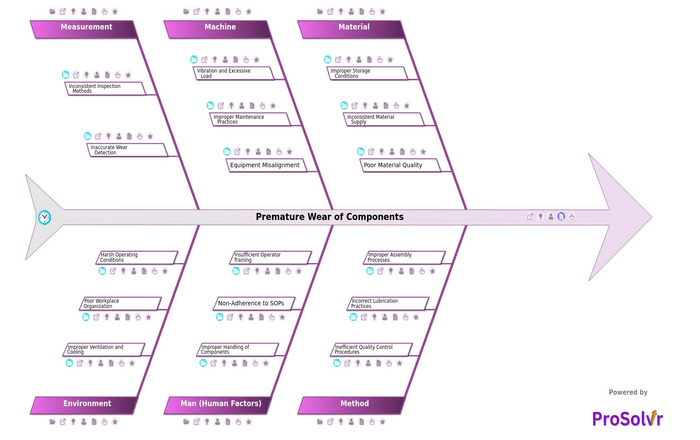
Material-related issues such as improper storage conditions, inconsistent material supply, contaminants, supplier quality variation, poor material quality, and incorrect material specifications often accelerate premature wear by compromising component integrity and strength.

In addition to material issues, manufacturing and assembly practices contribute to premature wear. ProSolvr enables manufacturers to perform a visual root cause analysis to identify inefficiencies in key areas, such as inefficient quality control procedures, inconsistent lubrication practices, and improper assembly processes. This includes factors like inconsistent lubrication frequency, using incorrect lubricants, poor fastening techniques, and incorrect torque application, which can all result in premature wear of critical parts. ProSolvr’s AI-powered fishbone diagrams allow manufacturers to map these root causes and develop actionable corrective actions based on the analysis.

Machine-related issues such as vibration and excessive load, often due to imbalanced rotating components, overloading of machines, and equipment misalignment (e.g., wear in guiding systems or improper machine installation), also play a significant role in premature wear. With ProSolvr, manufacturers can visualize these causes and identify hidden patterns of stress or strain on components. Additionally, improper maintenance practices such as using worn-out tooling or irregular preventive maintenance schedules can exacerbate these machine-related issues, further reducing the lifespan of critical components.

Human factors and measurement-related causes also contribute to premature wear. Improper handling of components during transport, non-adherence to SOPs, and insufficient operator training (such as lack of awareness about wear factors or inexperience in handling equipment) can lead to early deterioration. Inconsistent inspection methods, including manual errors and inaccurate wear detection due to poor calibration of measuring tools or the use of imprecise instruments, further complicate the issue. ProSolvr’s visual RCA framework helps manufacturers identify these critical gaps in process and training, enabling them to implement corrective actions that prevent future wear.

Premature Wear of Components

    • Material
      • Improper Storage Conditions
        • Improper temperature control
        • Exposure to moisture
      • Inconsistent Material Supply
        • Contaminants in materials
        • Supplier quality variation
      • Poor Material Quality
        • Use of substandard raw materials
        • Incorrect material specification
    • Method
      • Inefficient Quality Control Procedures
        • Inadequate testing protocols
        • Lack of standardized inspections
      • Incorrect Lubrication Practices
        • Inconsistent lubrication frequency
        • Use of wrong lubricants
      • Improper Assembly Processes
        • Poor fastening techniques
        • Incorrect torque application
    • Machine
      • Vibration and Excessive Load
        • Overloading of machines
        • Imbalanced rotating components
      • Improper Maintenance Practices
        • Use of worn-out tooling
        • Irregular preventive maintenance
      • Equipment Misalignment
        • Wear in guiding systems
        • Improper installation of machinery
    • Man (Human Factors)
      • Improper Handling of Components
        • Mishandling during transport
        • Rough manual loading/unloading
      • Non-Adherence to SOPs
        • Ignoring early wear signs
        • Bypassing quality checks
      • Insufficient Operator Training
        • Inexperience in handling equipment
        • Lack of awareness about wear factors
    • Measurement
      • Inconsistent Inspection Methods
        • Manual errors in measurement
        • Variation in inspection criteria
      • Inaccurate Wear Detection
        • Poor calibration of measuring tools
        • Lack of precision instruments
    • Environment
      • Improper Ventilation and Cooling
        • Poor air filtration causing dust contamination
        • Heat buildup leading to material degradation
      • Poor Workplace Organization
        • Uncontrolled contamination sources
        • Cluttered workspace leading to damage
      • Harsh Operating Conditions
        • Dust and debris accumulation
        • High humidity and temperature variation

Suggested Actions Checklist

Here are some corrective actions, preventive actions and investigative actions that organizations may find useful:

    • Material
      • Improper Storage Conditions
        • Corrective Actions:
          • Implement climate-controlled storage; use moisture-proof packaging.
        • Preventive Actions:
          • Establish material handling guidelines; train staff on proper storage.
        • Investigative Actions:
          • Audit storage conditions; analyze past material failures.
      • Inconsistent Material Supply
        • Corrective Actions:
          • Inspect incoming materials rigorously; reject contaminated supplies.
        • Preventive Actions:
          • Strengthen supplier quality agreements; conduct regular supplier audits.
        • Investigative Actions:
          • Review supplier compliance; analyze past material inconsistencies.
      • Poor Material Quality
        • Corrective Actions:
          • Replace defective materials; adjust procurement standards.
        • Preventive Actions:
          • Source from certified vendors; implement strict quality checks.
        • Investigative Actions:
          • Analyze past failures; identify root causes of material defects.
    • Method
      • Inefficient Quality Control Procedures
        • Corrective Actions:
          • Standardize inspection processes; retrain quality teams.
        • Preventive Actions:
          • Implement automated inspection systems; enforce testing protocols.
        • Investigative Actions:
          • Evaluate gaps in quality control; track defect trends.
      • Incorrect Lubrication Practices
        • Corrective Actions:
          • Use manufacturer-approved lubricants; adjust lubrication schedules.
        • Preventive Actions:
          • Develop lubrication SOPs; conduct technician training.
        • Investigative Actions:
          • Examine lubrication records; analyze failures related to lubrication.
      • Improper Assembly Processes
        • Corrective Actions:
          • Reassemble faulty components; ensure proper torque application.
        • Preventive Actions:
          • Train staff in correct assembly techniques; use torque monitoring tools.
        • Investigative Actions:
          • Audit assembly line errors; track common assembly failures.
    • Machine
      • Vibration and Excessive Load
        • Corrective Actions:
          • Rebalance machine components; adjust load capacities.
        • Preventive Actions:
          • Conduct periodic load assessments; install vibration dampers.
        • Investigative Actions:
          • Review machine performance logs; analyze past failures due to overload.
      • Improper Maintenance Practices
        • Corrective Actions:
          • Replace worn-out tools; schedule overdue maintenance.
        • Preventive Actions:
          • Implement regular maintenance schedules; train staff on tool inspections.
        • Investigative Actions:
          • Review maintenance logs; identify trends in equipment failures.
      • Equipment Misalignment
        • Corrective Actions:
          • Realign machinery; replace worn-out guiding systems.
        • Preventive Actions:
          • Implement laser alignment checks; ensure proper installation protocols.
        • Investigative Actions:
          • Assess alignment history; analyze premature equipment wear.
    • Man (Human Factors)
      • Improper Handling of Components
        • Corrective Actions:
          • Repack damaged components; reinforce safe handling procedures.
        • Preventive Actions:
          • Train staff on proper transport; use mechanical aids for loading.
        • Investigative Actions:
          • Assess handling practices; review damage reports.
      • Non-Adherence to SOPs
        • Corrective Actions:
          • Re-train operators on SOPs; enforce quality control measures.
        • Preventive Actions:
          • Implement compliance audits; introduce strict penalties for non-compliance.
        • Investigative Actions:
          • Monitor adherence trends; identify repeated SOP violations.
      • Insufficient Operator Training
        • Corrective Actions:
          • Provide additional hands-on training; assign mentors for new operators.
        • Preventive Actions:
          • Develop structured training programs; conduct skill assessments.
        • Investigative Actions:
          • Analyze operator performance data; assess training gaps.
    • Measurement
      • Inconsistent Inspection Methods
        • Corrective Actions:
          • Standardize inspection criteria; retrain inspectors.
        • Preventive Actions:
          • Use automated measurement tools; enforce inspection protocols.
        • Investigative Actions:
          • Compare inspection methods; identify inconsistencies in results.
      • Inaccurate Wear Detection
        • Corrective Actions:
          • Calibrate measuring tools; replace outdated instruments.
        • Preventive Actions:
          • Establish periodic calibration schedules; use advanced wear detection tools.
        • Investigative Actions:
          • Audit past measurement discrepancies; analyze accuracy levels.
    • Environment
      • Improper Ventilation and Cooling
        • Corrective Actions:
          • Improve ventilation systems; install better air filtration.
        • Preventive Actions:
          • Conduct periodic HVAC inspections; ensure proper cooling measures.
        • Investigative Actions:
          • Assess past contamination cases; analyze temperature impact on materials.
      • Poor Workplace Organization
        • Corrective Actions:
          • Remove clutter; organize workstations properly.
        • Preventive Actions:
          • Implement 5S workplace practices; conduct regular audits.
        • Investigative Actions:
          • Analyze workspace efficiency; identify sources of contamination.
      • Harsh Operating Conditions
        • Corrective Actions:
          • Shield components from dust and humidity; reinforce environmental controls.
        • Preventive Actions:
          • Use protective enclosures; conduct routine environmental assessments.
        • Investigative Actions:
          • Analyze failures linked to environmental conditions; review historical performance data.
 

Who can use the Premature Wear of Components template?

  • Maintenance and Reliability Engineers: They can use the template to identify failure patterns, improve preventive maintenance schedules, and implement corrective actions to extend the lifespan of components.
  • Quality Assurance and Control Teams: The structured breakdown helps them analyze material defects, assembly inconsistencies, and inspection flaws, ensuring better compliance with quality standards.
  • Manufacturing and Production Managers: Understanding wear-related failures enables them to refine production processes, improve supplier selection, and enforce stricter process controls.
  • Automotive Design and R&D Engineers: Insights from the template can guide material selection, lubrication optimization, and stress testing to enhance component durability in new vehicle designs.
  • Procurement and Supply Chain Professionals: By recognizing the impact of inconsistent material supply and supplier quality variations, they can make informed sourcing decisions and establish stronger quality control measures.
  • Training and Workforce Development Teams: The template provides structured knowledge for training operators and technicians on proper handling, adherence to SOPs, and best practices for minimizing wear-related failures.

Why use this template?

ProSolvr can highlight historical trends, reducing future failures. The application enables CAPA implementation tracking by organizations, ensuring that once root causes are addressed, preventive measures can be enforced to sustain improvements. This systematic approach not only mitigates recurring failures but also enhances overall process efficiency and product reliability in the automobile industry.

Try ProSolvr by smartQED for efficient root cause analysis in your automobile plant to eliminate organizational and manufacturing issues.

Curated from community experience and public sources:

  • https://www.sciencedirect.com/science/article/abs/pii/S1350630798000107
  • https://carexamer.com/blog/wear-and-tear-definition-in-the-automotive-industry/
