






ProSolvr logo

Resolve problems, permanently

Root Cause Analysis for Stack Emissions Exceeding Limits

RCA of Stack Emissions Exceeding Limits

Stack emissions exceeding limits occur when pollutants released from industrial chimneys or stacks surpass the permissible thresholds set by environmental authorities. In petrochemical plants, this is a critical issue because these emissions often contain harmful substances like carbon monoxide, sulfur oxides, nitrogen oxides, and unburned hydrocarbons.

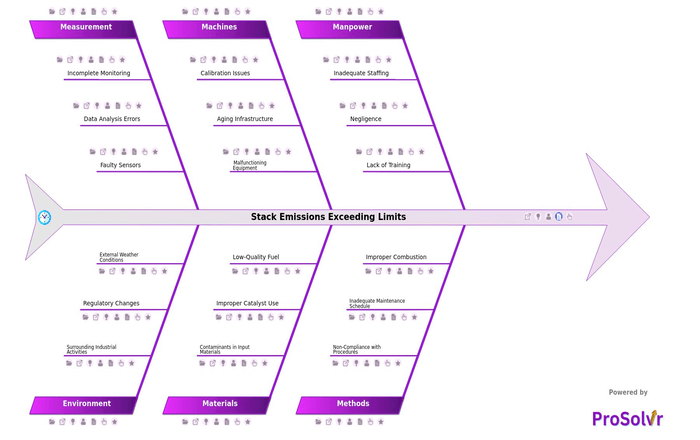
There are many factors that contribute to excessive stack emissions in petrochemical plants. Inadequate staffing or lack of training may result in negligence and insufficient oversight of operational processes. Non-compliance with procedures and improper combustion can lead to inefficient chemical reactions, creating more pollutants. Aging infrastructure and malfunctioning equipment, such as outdated machines, exacerbate the issue by failing to properly manage emissions. Additionally, contaminants in input materials, such as low-quality fuel or improper catalyst use, complicate the process, making it harder to control emissions. Calibration issues in measurement tools and incomplete monitoring due to faulty sensors or poor data analysis further hinder detection and prevention of excess emissions.

In addition to these internal factors, external influences like surrounding industrial activities, regulatory changes, and even external weather conditions can impact stack emissions. These variables need to be closely monitored and addressed to prevent violations and ensure safety.

Once an emission incident occurs, visual GEN-AI-powered root cause analysis (RCA) using a fishbone diagram and Six Sigma methods can be instrumental in identifying and addressing the underlying causes. The fishbone diagram categorizes potential causes into logical groups, helping teams trace the root issues systematically. By focusing on gaps in the maintenance schedule and other operational weaknesses, organizations can then implement Corrective and Preventive Actions (CAPA). ProSolvr helps streamline this process by quickly identifying inefficiencies and providing tailored solutions to reduce stack emissions, ensure regulatory compliance, and improve safety in petrochemical plants.

Stack Emissions Exceeding Limits

    • Manpower
      • Inadequate Staffing
      • Negligence
      • Lack of Training
    • Methods
      • Non-Compliance with Procedures
      • Inadequate Maintenance Schedule
      • Improper Combustion
    • Machines
      • Calibration Issues
      • Aging Infrastructure
      • Malfunctioning Equipment
    • Materials
      • Contaminants in Input Materials
      • Improper Catalyst Use
      • Low-Quality Fuel
    • Measurement
      • Incomplete Monitoring
      • Data Analysis Errors
      • Faulty Sensors
    • Environment
      • Surrounding Industrial Activities
      • Regulatory Changes
      • External Weather Conditions
 

Suggested Actions Checklist

These corrective, preventive and investigative actions can provide a structured approach to addressing excessive VOC emissions and mitigating their recurrence.

    • Manpower
      • Inadequate Staffing
        • Corrective Actions:
          • Temporarily reassign or hire additional personnel to meet immediate staffing needs.
        • Preventive Actions:
          • Establish a workforce planning system to maintain optimal staffing levels.
        • Investigative Actions:
          • Review historical staffing levels and correlate with operational performance to identify patterns.
      • Negligence
        • Corrective Actions:
          • Address specific incidents through counseling, retraining, or disciplinary measures.
        • Preventive Actions:
          • Develop clear accountability frameworks and reward systems to promote diligence.
        • Investigative Actions:
          • Analyze incident reports to understand recurring negligence-related issues.
      • Lack of Training
        • Corrective Actions:
          • Conduct immediate skill-specific training for affected staff.
        • Preventive Actions:
          • Implement a continuous learning program with regular skill assessments.
        • Investigative Actions:
          • Evaluate training records to identify gaps and prioritize essential modules.
    • Methods
      • Non-Compliance with Procedures
        • Corrective Actions:
          • Reinforce adherence by reissuing clear procedural guidelines and conducting audits.
        • Preventive Actions:
          • Integrate compliance metrics into performance evaluations.
        • Investigative Actions:
          • Examine procedure logs to pinpoint deviations and their underlying reasons.
      • Inadequate Maintenance Schedule
        • Corrective Actions:
          • Update the maintenance schedule to cover missed tasks and address immediate issues.
        • Preventive Actions:
          • Introduce predictive maintenance systems to ensure proactive upkeep.
        • Investigative Actions:
          • Review historical maintenance records to identify inconsistencies or oversights.
      • Improper Combustion
        • Corrective Actions:
          • Adjust combustion settings and conduct immediate equipment repairs or recalibrations.
        • Preventive Actions:
          • Develop detailed combustion protocols and schedule regular inspections.
        • Investigative Actions:
          • Analyze emission data trends to determine combustion inefficiencies.
    • Machines
      • Calibration Issues
        • Corrective Actions:
          • Recalibrate affected machinery and verify accuracy.
        • Preventive Actions:
          • Establish a routine calibration schedule aligned with equipment specifications.
        • Investigative Actions:
          • Examine past calibration data to understand frequency and adequacy.
      • Aging Infrastructure
        • Corrective Actions:
          • Replace or repair damaged infrastructure components.
        • Preventive Actions:
          • Develop an asset lifecycle management plan for timely upgrades.
        • Investigative Actions:
          • Conduct structural assessments to evaluate current conditions and risks.
      • Malfunctioning Equipment
        • Corrective Actions:
          • Repair or replace malfunctioning units and test their performance.
        • Preventive Actions:
          • Maintain a spare parts inventory and establish routine checks.
        • Investigative Actions:
          • Investigate failure logs to detect patterns or recurring issues.
    • Materials
      • Contaminants in Input Materials
        • Corrective Actions:
          • Isolate and replace contaminated materials in current operations.
        • Preventive Actions:
          • Work with suppliers to enforce stricter material quality standards.
        • Investigative Actions:
          • Perform root cause analysis on the contamination source, including supply chain audits.
      • Improper Catalyst Use
        • Corrective Actions:
          • Stop operations, remove improperly used catalysts, and replace them with the correct type.
        • Preventive Actions:
          • Train staff on proper catalyst handling and ensure storage protocols are followed.
        • Investigative Actions:
          • Review catalyst usage logs to trace the error.
      • Low-Quality Fuel
        • Corrective Actions:
          • Replace low-quality fuel with approved alternatives to meet operational standards.
        • Preventive Actions:
          • Establish stricter fuel procurement criteria and perform quality checks.
        • Investigative Actions:
          • Audit procurement records to identify sources of substandard fuel.
    • Measurement
      • Incomplete Monitoring
        • Corrective Actions:
          • Install additional monitoring equipment and expand monitoring coverage.
        • Preventive Actions:
          • Conduct periodic evaluations of monitoring systems to ensure comprehensive data collection.
        • Investigative Actions:
          • Analyze gaps in existing monitoring systems to determine their root causes.
      • Data Analysis Errors
        • Corrective Actions:
          • Correct erroneous data points and recalibrate analysis tools.
        • Preventive Actions:
          • Provide advanced training for personnel in data analysis techniques.
        • Investigative Actions:
          • Audit data handling procedures to identify vulnerabilities in analysis workflows.
      • Faulty Sensors
        • Corrective Actions:
          • Replace or repair faulty sensors and recalibrate systems.
        • Preventive Actions:
          • Schedule routine sensor diagnostics and recalibration.
        • Investigative Actions:
          • Examine sensor failure logs to determine potential causes.
    • Environment
      • Surrounding Industrial Activities
        • Corrective Actions:
          • Coordinate with neighboring industries to mitigate collective emissions impact.
        • Preventive Actions:
          • Implement joint monitoring programs to track and manage cumulative emissions.
        • Investigative Actions:
          • Analyze emissions patterns to isolate the contribution of external industrial activities.
      • Regulatory Changes
        • Corrective Actions:
          • Update operational practices to comply with new regulations.
        • Preventive Actions:
          • Stay informed about potential regulatory shifts and engage in policy consultations.
        • Investigative Actions:
          • Evaluate non-compliance risks from past and current regulatory changes.
      • External Weather Conditions
        • Corrective Actions:
          • Adjust operations temporarily to mitigate weather-related impacts on emissions.
        • Preventive Actions:
          • Develop weather-adaptive operational guidelines to handle seasonal changes.
        • Investigative Actions:
          • Review meteorological data to understand correlations between weather conditions and emissions.
 

Who can learn from the Stack Emissions Exceeding Limits template?

  • Operations Team: They can learn about improving day-to-day process compliance, monitoring, and maintenance schedules to avoid emissions exceedances.
  • Maintenance Engineers: Insights from the RCA can help them refine maintenance protocols, address aging infrastructure, and ensure proper equipment calibration.
  • Environmental Health and Safety (EHS) Officers: EHS teams can use RCA findings to enhance regulatory compliance strategies and minimize environmental and health risks.
  • Training and Development Staff: They can develop targeted training programs to address gaps in workforce skills, reducing negligence and improving operational awareness.
  • Procurement and Supply Chain Teams: These teams can focus on sourcing higher-quality raw materials and catalysts, reducing the risk of contaminants and suboptimal inputs.
  • Management and Leadership: They can use RCA outcomes to drive organizational improvements, allocate resources effectively, and foster a culture of accountability and innovation.

Why use this template?

A structured post-incident RCA process not only solves immediate problems but also establishes long-term preventive mechanisms. It helps in enhancing operational efficiency, ensuring compliance with regulations, and reducing the risk of future emissions exceedances. Furthermore, by linking causes to CAPA, the process ensures a holistic response, encompassing both immediate fixes and systemic improvements. This ultimately supports the plant’s sustainability goals and fosters a safer, more reliable operating environment. Six Sigma principles emphasize reducing variability and enhancing process consistency, which is crucial for preventing recurrence and solving the problem permanently.

Take your problem-solving to the next level with ProSolvr by smartQED, a powerful tool to reveal root causes and implement effective CAPA. Start optimizing your operations today!

Curated from community experience and public sources:

  • https://www.ppsthane.com/stack-emissions-monitoring-testing
  • https://www.sciencedirect.com/topics/pharmacology-toxicology-and-pharmaceutical-science/emission-limit
