






ProSolvr logo

Resolve problems, permanently

Renewable Energy Output Reduction Root Cause Analysis

RCA of Renewable Energy Output Reduction

Renewable energy output reduction occurs when power generation from renewable sources such as solar panels, wind turbines, or hydro plants falls below expected performance levels. This decline can result from a variety of factors like technical malfunctions, environmental interferences, grid limitations, or policy-related constraints. In the energy domain, such reductions can have significant consequences, including loss of production efficiency, increased reliance on non-renewable backup systems, and financial strain due to unmet supply commitments.

Faulty inverters or transformers can disrupt energy conversion efficiency, while aging of components or poor material quality can lead to mechanical degradation, lowering the overall output of renewable installations. Environmental conditions also play a major role in performance dips. Vegetation growth near wind turbines or dust accumulation on panels can block airflow or light absorption, directly diminishing power generation capacity. Likewise, unpredictable climate patterns and seasonal variations can cause inconsistent energy supply, complicating grid balancing and planning. Beyond these technical and environmental challenges, systemic issues such as grid congestion or lack of smart grid integration can further restrict the efficient transmission and distribution of renewable power.

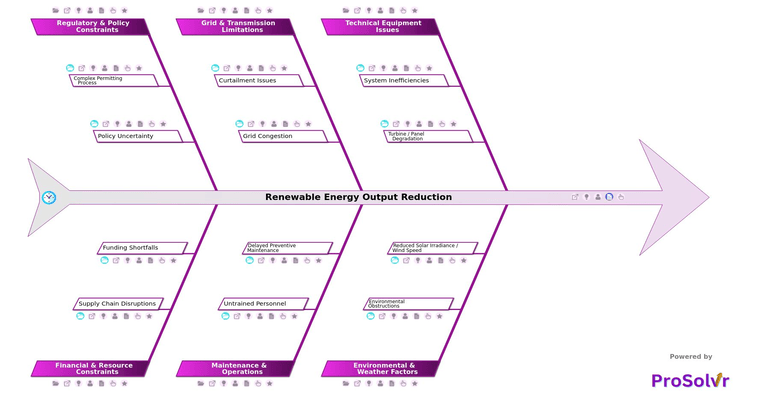
A structured Root Cause Analysis (RCA) can be crucial for identifying why it happened and how to prevent recurrence. A GEN-AI powered RCA tool using a fishbone (Ishikawa) diagram grounded in Six Sigma principles can greatly enhance problem solving. The fishbone diagram allows teams to categorize potential causes and this structured visualization makes it easier to pinpoint the underlying contributors rather than just addressing surface symptoms. This approach supports effective CAPA (Corrective and Preventive Actions) by linking each identified root cause to a tangible resolution.

A root cause analysis platform like ProSolvr, powered by GEN-AI and designed around the fishbone methodology, brings clarity and efficiency to this problem-solving process. ProSolvr enables teams to visually map out interconnected causes. Through guided RCA workflows, ProSolvr helps teams systematically question assumptions, organize findings, and document CAPA actions with precision.

Renewable Energy Output Reduction

    • Technical Equipment Issues
      • System Inefficiencies
        • Suboptimal design configuration
        • Faulty inverters or transformers
      • Turbine / Panel Degradation
        • Poor material quality
        • Aging of components
    • Environmental & Weather Factors
      • Environmental Obstructions
        • Vegetation growth near wind turbines
        • Dust accumulation on panels
      • Reduced Solar Irradiance / Wind Speed
        • Unpredictable climate patterns
        • Seasonal variations
    • Grid & Transmission Limitations
      • Curtailment Issues
        • Grid instability protocols
        • Overproduction during low demand
      • Grid Congestion
        • Lack of smart grid integration
        • Transmission capacity limits
    • Maintenance & Operations
      • Untrained Personnel
        • Poor safety practices leading to downtime
        • Insufficient technical training
      • Delayed Preventive Maintenance
        • Inadequate spare parts availability
        • Lack of predictive maintenance systems
    • Regulatory & Policy Constraints
      • Complex Permitting Process
        • Lack of standardization across regions
        • Multiple agency requirements
      • Policy Uncertainty
        • Delays in renewable project approvals
        • Frequent subsidy or tariff changes
    • Financial & Resource Constraints
      • Supply Chain Disruptions
        • Delayed supplier deliveries
        • Shortage of critical components (e.g., inverters)
      • Funding Shortfalls
        • High interest rates on renewable projects
        • Limited investment in infrastructure upgrades

Suggested Actions Checklist

Here are some corrective actions, preventive actions and investigative actions that organizations may choose from:

    • Technical Equipment Issues
      • System Inefficiencies
        • Corrective Actions:
          • Redesign or recalibrate faulty configurations and replace defective inverters or transformers.
        • Preventive Actions:
          • Implement robust design validation and regular performance audits of system components.
        • Investigative Actions:
          • Analyze failure reports and design logs to identify recurring inefficiencies or component weaknesses.
      • Turbine / Panel Degradation
        • Corrective Actions:
          • Replace degraded panels or turbine parts and restore affected circuits.
        • Preventive Actions:
          • Introduce scheduled inspections and use higher-grade materials to enhance component durability.
        • Investigative Actions:
          • Examine historical maintenance data to determine degradation trends and contributing factors.
    • Environmental & Weather Factors
      • Environmental Obstructions
        • Corrective Actions:
          • Remove vegetation and clean dust or debris affecting panels or turbine systems.
        • Preventive Actions:
          • Establish a periodic site maintenance plan and install monitoring systems to detect obstructions early.
        • Investigative Actions:
          • Review site layout and environmental management logs to assess recurring obstruction causes.
      • Reduced Solar Irradiance / Wind Speed
        • Corrective Actions:
          • Adjust power generation planning and recalibrate energy forecasting systems to match current conditions.
        • Preventive Actions:
          • Use predictive climate modeling and diversify renewable assets across regions to reduce dependence on single sources.
        • Investigative Actions:
          • Analyze historical irradiance and wind data to correlate short-circuit occurrences with weather fluctuations.
    • Grid & Transmission Limitations
      • Curtailment Issues
        • Corrective Actions:
          • Optimize grid synchronization and manage generation loads during low-demand periods.
        • Preventive Actions:
          • Develop coordination protocols with grid operators to balance supply and demand dynamically.
        • Investigative Actions:
          • Study grid logs to determine whether curtailments were triggered by overproduction or grid protection systems.
      • Grid Congestion
        • Corrective Actions:
          • Reroute or stagger power output to avoid transmission overload.
        • Preventive Actions:
          • Upgrade transmission lines and implement smart grid technologies for better load management.
        • Investigative Actions:
          • Examine congestion reports and real-time dispatch data to identify capacity bottlenecks.
    • Maintenance & Operations
      • Untrained Personnel
        • Corrective Actions:
          • Conduct immediate retraining and enforce standard operating procedures for all maintenance staff.
        • Preventive Actions:
          • Implement regular competency assessments and certification programs for technical personnel.
        • Investigative Actions:
          • Review incident reports and training records to identify knowledge or procedural gaps.
      • Delayed Preventive Maintenance
        • Corrective Actions:
          • Execute overdue maintenance tasks and replenish critical spare parts inventory.
        • Preventive Actions:
          • Introduce a computerized maintenance management system (CMMS) to schedule and track maintenance activities.
        • Investigative Actions:
          • Audit maintenance logs to determine root causes of delays, such as supply shortages or scheduling inefficiencies.
    • Regulatory & Policy Constraints
      • Complex Permitting Process
        • Corrective Actions:
          • Expedite pending applications through active coordination with regulatory authorities.
        • Preventive Actions:
          • Standardize internal compliance procedures and maintain updated regulatory documentation.
        • Investigative Actions:
          • Map out permitting workflows to identify stages causing the longest delays or redundancies.
      • Policy Uncertainty
        • Corrective Actions:
          • Reassess ongoing projects and adjust timelines or budgets to align with new policy directions.
        • Preventive Actions:
          • Maintain a regulatory watch mechanism to anticipate and prepare for policy shifts.
        • Investigative Actions:
          • Review historical policy changes to evaluate their impact on project delays and cost overruns.
    • Financial & Resource Constraints
      • Supply Chain Disruptions
        • Corrective Actions:
          • Identify and engage alternate suppliers to restore material flow quickly.
        • Preventive Actions:
          • Build multi-sourcing strategies and maintain buffer inventories for critical components.
        • Investigative Actions:
          • Trace disruption sources through supplier audits and logistics tracking data.
      • Funding Shortfalls
        • Corrective Actions:
          • Secure bridge financing or renegotiate project funding terms with financial institutions.
        • Preventive Actions:
          • Establish financial contingency plans and maintain diversified investment portfolios.
        • Investigative Actions:
          • Analyze cash flow patterns and project expenditure reports to identify funding gaps and inefficiencies.
 

Who can learn from the Renewable Energy Output Reduction template?

  • Operations and Maintenance Teams: These teams can use the RCA findings to improve maintenance scheduling, address technical issues like equipment degradation, and ensure preventive maintenance systems are in place to avoid downtime. The insights help them maintain consistent performance and reduce unplanned outages.
  • Engineering and Design Teams: RCA outcomes help engineers refine design configurations and material selections to enhance system efficiency and durability. By understanding failures like suboptimal designs or component aging, they can develop more robust renewable energy systems for future projects.
  • Grid and Transmission Operators: Operators can learn how grid-related limitations such as congestion or instability affect renewable energy delivery. The RCA helps them optimize load management, improve transmission capacity, and integrate smarter grid solutions.
  • Procurement and Supply Chain Managers: These professionals can use RCA insights to strengthen supplier evaluation, manage delays, and mitigate risks associated with component shortages or quality issues. It reinforces the importance of supplier reliability and timely availability of critical parts.
  • Regulatory and Policy Teams: Regulatory personnel can understand how complex permitting processes and policy uncertainties contribute to project delays or operational inefficiencies. The RCA helps them advocate for clearer, more consistent regulations that support renewable growth.
  • Training and Human Resource Departments: RCA findings can highlight areas where personnel lacked adequate technical or operational knowledge. HR and training teams can use these insights to design targeted learning programs that build technical competence and improve safety and efficiency.

Why use this template?

What makes tools like ProSolvr particularly valuable is their ability to transform complex scenarios regarding renewable energy issues into structured improvement plans. ProSolvr can assist teams in developing a comprehensive CAPA roadmap that addresses both immediate technical fixes and long-term process improvements. By fostering structured collaboration and accountability, the tool ensures that lessons from one incident translate into measurable progress across the energy ecosystem. GEN-AI powered RCA tools like ProSolvr enable renewable energy companies to convert setbacks into learning opportunities, driving greater reliability, efficiency, and sustainability.

Use ProSolvr by smartQED resolve complex problems in your energy plants for sustainable improvement.

Curated from community experience and public sources:

  • https://www.sciencedirect.com/science/article/abs/pii/S0360544222011689
  • https://www.greenmatch.co.uk/blog/2021/09/advantages-and-disadvantages-of-renewable-energy
