






ProSolvr logo

Resolve problems, permanently

Production Line Issues Root Cause Analysis

Root Cause Analysis of Production Line Issues

Production line issues disrupt manufacturing processes and prevent smooth, consistent output. It refers to any disruptions, inefficiencies, or failures that prevent a manufacturing process from operating smoothly, consistently, and at the required quality level. These issues can occur at any stage of production. When not addressed early, they lead to reduced productivity, higher defect rates, delayed deliveries, and increased operational costs.

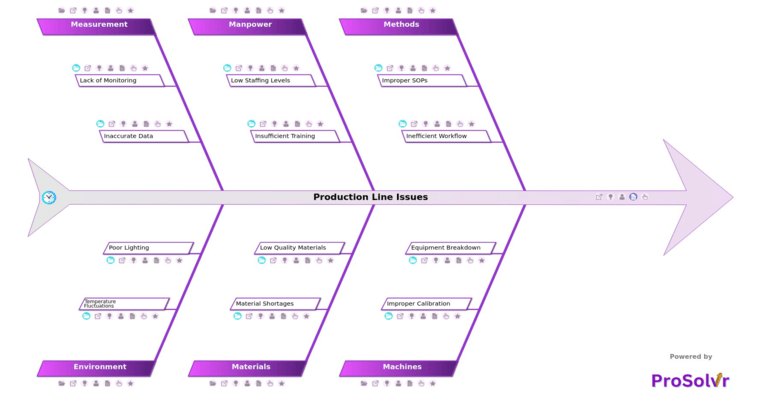
Under Methods, improper SOPs, lack of revisions, and outdated procedures often create inefficient workflow. Unclear work instructions and poor layout design slow down operations and create bottlenecks. In Machines, improper calibration by untrained technicians, irregular calibration, equipment breakdown, aging machinery, and inadequate maintenance cause inconsistent production results. Even small mechanical issues can quickly escalate into major production line issues.

Manpower challenges such as low staffing levels, absenteeism, high turnover, insufficient training, and lack of skill matrix visibility reduce operational stability. At the same time, Materials problems including material shortages, poor inventory control, delayed deliveries, low quality materials, improper storage, and supplier inconsistency interrupt production flow. Measurement gaps such as lack of monitoring, infrequent inspections, no real time tracking, inaccurate data, manual entry errors, and faulty sensors prevent early detection of problems. Environmental conditions also play a role. Temperature fluctuations, open factory layout, poor HVAC, poor lighting, faulty fixtures, and dm factory areas can affect both productivity and quality.

To permanently eliminate Production Line Issues, organizations need structured Root Cause Analysis supported by strong CAPA execution. ProSolvr is a Gen-AI powered visual problem collaboration application that helps teams systematically identify root causes, connect related factors, and implement corrective and preventive actions to ensure long term production stability.


Production Line Issues

    • Methods
      • Improper SOPs
        • Lack of revisions
        • Outdated procedures
      • Inefficient Workflow
        • Unclear work instructions
        • Poor layout design
    • Machines
      • Improper Calibration
        • Untrained technicians
        • Irregular calibration
      • Equipment Breakdown
        • Aging machinery
        • Inadequate maintenance
    • Manpower
      • Low Staffing Levels
        • Absenteeism
        • High turnover
      • Insufficient Training
        • Lack of skill matrix
        • No refresher programs
    • Materials
      • Material Shortages
        • Poor inventory control
        • Delayed deliveries
      • Low Quality Materials
        • Improper storage
        • Supplier inconsistency
    • Measurement
      • Lack of Monitoring
        • Infrequent inspections
        • No real time tracking
      • Inaccurate Data
        • Manual entry errors
        • Faulty sensors
    • Environment
      • Temperature Fluctuations
        • Open factory layout
        • Poor HVAC
      • Poor Lighting
        • Faulty fixtures
        • Dim factory areas

Suggested Actions Checklist

Here are some corrective actions, preventive actions and investigative actions that organizations may find useful:

    • Methods
      • Improper SOPs
        • Corrective Actions:
          • Update and standardize all SOPs to reflect current operating requirements.
        • Preventive Actions:
          • Establish a periodic SOP review cycle with cross-functional approval.
        • Investigative Actions:
          • Analyze past deviations and incidents to identify gaps caused by outdated or unclear SOPs.
      • Inefficient Workflow
        • Corrective Actions:
          • Redesign the workflow to remove bottlenecks and improve task sequencing.
        • Preventive Actions:
          • Implement routine workflow audits to ensure processes remain optimized.
        • Investigative Actions:
          • Conduct a workflow study to assess movement, delays, and layout inefficiencies.
    • Machines
      • Improper Calibration
        • Corrective Actions:
          • Conduct immediate calibration of all affected equipment by certified technicians.
        • Preventive Actions:
          • Implement a digital calibration schedule with automated reminders.
        • Investigative Actions:
          • Review calibration logs to determine frequency and causes of missed calibrations.
      • Equipment Breakdown
        • Corrective Actions:
          • Repair or replace malfunctioning equipment and restore it to safe working condition.
        • Preventive Actions:
          • Introduce a preventive maintenance program with defined servicing intervals.
        • Investigative Actions:
          • Examine breakdown history and maintenance records to identify recurring failure patterns.
    • Manpower
      • Low Staffing Levels
        • Corrective Actions:
          • Hire temporary or permanent staff to fill immediate operational gaps.
        • Preventive Actions:
          • Create a workforce planning model to predict staffing needs in advance.
        • Investigative Actions:
          • Assess attendance records and turnover data to understand staffing shortages.
      • Insufficient Training
        • Corrective Actions:
          • Conduct targeted training sessions to address current skill gaps.
        • Preventive Actions:
          • Develop a competency-based training program with periodic refresher courses.
        • Investigative Actions:
          • Evaluate training records and skill matrices to identify critical knowledge deficiencies.
    • Materials
      • Material Shortages
        • Corrective Actions:
          • Expedite procurement orders and redistribute existing inventory to critical areas.
        • Preventive Actions:
          • Implement automated inventory management with minimum–maximum stock levels.
        • Investigative Actions:
          • Trace supply chain delays and analyze inventory planning accuracy.
      • Low Quality Materials
        • Corrective Actions:
          • Reject defective materials and engage suppliers to replace non-conforming stock.
        • Preventive Actions:
          • Establish stricter incoming quality checks and approved supplier list criteria.
        • Investigative Actions:
          • Review supplier performance and past inspection data to determine root causes of quality issues.
    • Measurement
      • Lack of Monitoring
        • Corrective Actions:
          • Increase inspection frequency and establish monitoring checkpoints in critical areas.
        • Preventive Actions:
          • Create a monitoring plan with assigned responsibilities and regular review intervals.
        • Investigative Actions:
          • Examine inspection logs to identify when and why monitoring lapses occurred.
      • Inaccurate Data
        • Corrective Actions:
          • Correct erroneous data entries and recalibrate faulty measuring tools.
        • Preventive Actions:
          • Standardize data entry procedures and introduce double-verification steps.
        • Investigative Actions:
          • Audit previous records to pinpoint trends in data inaccuracies.
    • Environment
      • Temperature Fluctuations
        • Corrective Actions:
          • Stabilize temperature by repairing HVAC systems or adding temporary climate control measures.
        • Preventive Actions:
          • Set up a preventive HVAC maintenance plan to ensure consistent operation.
        • Investigative Actions:
          • Perform a temperature mapping study to determine variability sources.
      • Poor Lighting
        • Corrective Actions:
          • Replace faulty lighting fixtures and improve illumination in affected areas.
        • Preventive Actions:
          • Implement scheduled lighting inspections and replace aging fixtures proactively.
        • Investigative Actions:
          • Evaluate accident reports and operator feedback to quantify the impact of poor lighting.
 

Who can learn from the Production Line Issues template?

  • Production Managers: They can understand how workflow inefficiencies, equipment issues, and staffing problems affect production performance and use insights to improve planning and coordination.
  • Quality Assurance Teams: They can learn how Improper SOPs, Infrequent inspections, and Inaccurate Data contribute to defects, helping them strengthen quality controls and auditing processes.
  • Maintenance Teams: They gain valuable insights into issues such as Improper Calibration, Aging machinery, and Inadequate maintenance, enabling them to improve preventive maintenance schedules and equipment reliability.
  • Training and HR Departments: They can identify gaps like Insufficient Training, Lack of skill matrix, and No refresher programs, helping them design more effective training programs and competency frameworks.
  • Inventory and Supply Chain Teams: They can benefit from recognizing issues such as Material Shortages, Poor inventory control, and Delayed deliveries, which allows them to enhance material planning and supplier management.
  • Health, Safety, and Environment (HSE) Teams: They can use insights related to Temperature Fluctuations, Poor Lighting, and general environmental factors to improve workplace safety, ergonomics, and environmental controls.

Why use this template?

ProSolvr can help manufacturing teams visually organize causes, explore causal relationships, and ensure no contributing factor is overlooked. By guiding users through a structured evaluation framework, ProSolvr enables the creation of effective, data-driven CAPA plans that strengthen processes, enhance reliability, and reduce the likelihood of future production line disruptions. This makes RCA not only an efficient methodology but a foundation for long-term manufacturing excellence.

Use ProSolvr by smartQED in your manufacturing plants and get rid of production line issues forever, for sustainable growth and development of your organization.

Curated from community experience and public sources:

  • https://www.netsuite.com/portal/resource/articles/erp/manufacturing-industry-challenges.shtml
  • https://www.nrtcautomation.com/blog/the-biggest-problem-with-your-manufacturing-line-and-how-you-can-fix-it
