







RCA of Medication Errors
Medication errors in the healthcare sector, particularly in hospitals, are preventable mistakes that occur during prescribing, dispensing, or administering medications. In a complex hospital environment where multiple stakeholders interact under time pressure, even a small lapse, such as wrong patient identification or incorrect dosage, can lead to serious safety issues and life-threatening consequences.
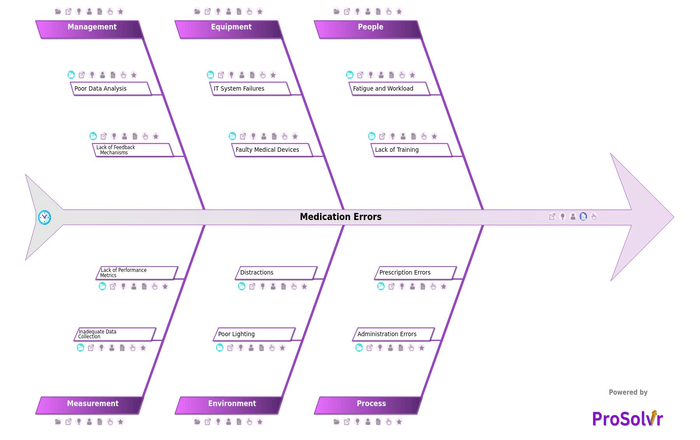
These errors are often linked to People factors such as fatigue and workload caused by staff shortages and long working hours, as well as lack of training, including no refresher programs and inadequate pharmacology knowledge. Process gaps are a major contributor to medication errors. Administration errors such as incorrect timing of medication and wrong patient identification are common, while prescription errors like incorrect dosage prescribed and illegible handwriting make the problem worse.
In addition, equipment-related issues such as IT system failures, including barcode scanning failures and EHR glitches, along with faulty medical devices like calibration issues or infusion pump malfunctions, further increase the chances of error. These challenges are often compounded by environmental factors such as poor lighting, inadequate workspace design, and frequent interruptions during medication rounds, which reduce accuracy and increase the likelihood of mistakes.
Management and measurement gaps allow these issues to persist. Poor data analysis and lack of trend identification limit the ability to address root problems, while absence of feedback mechanisms and outdated review protocols prevent continuous improvement. The lack of performance metrics and inadequate data collection further reduce visibility, leading to repeated errors and compromised patient safety.
This is where Root Cause Analysis (RCA) becomes essential. It helps identify underlying causes across people, process, equipment, environment, and management factors, enabling targeted corrective and preventive actions. An advanced RCA application like ProSolvr, supported by Generative AI, enhances this process by structuring cause trees and supporting effective analysis, helping reduce repeat errors and improve patient safety.
Who can learn from the Medication Errors template?
- Doctors and Prescribers: They can understand how prescription errors such as incorrect dosage or illegible handwriting contribute to medication risks, enabling them to adopt safer prescribing practices and standardized protocols.
- Nursing Staff: As primary administrators of medication, nurses can gain insights into risks related to incorrect timing, patient misidentification, and workplace distractions, helping them improve accuracy and adherence to protocols.
- Pharmacists: They can identify gaps in prescription validation, drug dispensing, and communication with clinical staff, allowing them to act as a critical checkpoint in preventing medication errors.
- Hospital Administrators and Management: They can recognize systemic issues such as staffing shortages, lack of feedback mechanisms, and poor data analysis, enabling better policy-making, resource allocation, and governance.
- Quality Assurance and Patient Safety Teams: These teams can leverage RCA findings to implement monitoring systems, define KPIs, and ensure continuous tracking and reduction of medication error rates.
- IT and Biomedical Engineering Teams: They can understand the impact of system failures like EHR glitches, barcode scanning issues, and device malfunctions, helping them improve system reliability, maintenance, and technology integration.
Why use this template?
ProSolvr can help standardize RCA processes, improve collaboration among stakeholders, and ensure that insights are effectively communicated across teams. Such applications empower healthcare organizations to enhance patient safety, reduce medication errors, and build a more resilient and reliable care delivery system.
Use ProSolvr by smartQED to ensure patient safety and improved healthcare facilities by successfully eliminating causes that could lead to medication errors.


