






ProSolvr logo

Resolve problems, permanently

Root Cause Analysis of Improper Disposal of Biomedical Waste

RCA of Infection in Hospitals

Improper disposal of biomedical waste means not handling or separating medical waste correctly. This includes items like infectious waste, sharps, and medicines. When proper rules are not followed, it can harm healthcare workers, patients, and the public. It can cause infections, injuries like needle stick incidents, and pollution of air, water, and soil. It also increases hospital acquired infections and can lead to legal issues and damage to the organization’s reputation.

These problems usually happen because of gaps in people, processes, and infrastructure. Staff may not follow rules due to low awareness, lack of ownership, or poor training. Sometimes, procedures are outdated or not clearly defined, which leads to incorrect waste segregation during handling, transport, or storage. Poor infrastructure such as wrong bin design, lack of color coding, limited PPE, and bad placement of bins also makes proper disposal difficult, especially when staff are under pressure or workload is high.

Management and monitoring issues make the situation worse. When rules are not strictly enforced and responsibilities are not clear, compliance drops. Lack of proper audits, weak follow up, and poor use of audit results prevent improvement. In addition, when there is no proper system to track waste data or measure performance, it becomes difficult to identify problems or improve processes over time.

Root Cause Analysis helps solve these issues by finding the real reasons behind them instead of just fixing what is visible. ProSolvr supports this by providing a simple and visual way to analyze problems using tools like Fishbone diagrams. It also uses AI to suggest deeper and relevant causes and helps teams create effective Corrective and Preventive Actions. This helps healthcare organizations improve compliance, reduce risks, and ensure better safety for patients and staff.

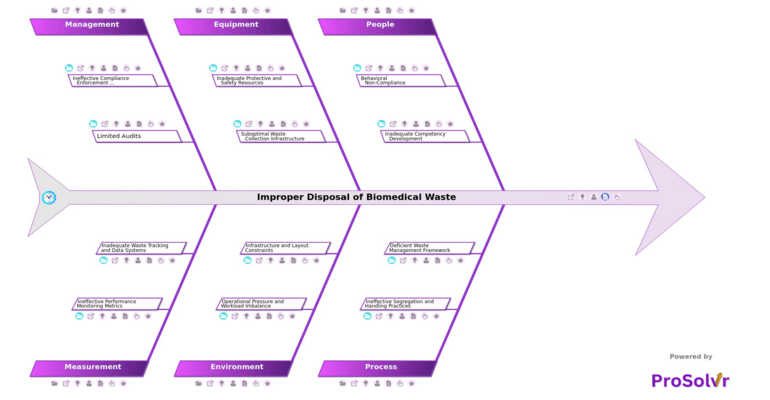
Improper Disposal of Biomedical Waste

    • People
      • Behavioral Non-Compliance
        • Weak ownership and accountability in waste handling responsibilities
        • Low risk awareness leading to routine bypassing of SOPs
      • Inadequate Competency Development
        • Lack of role-specific and practical training on waste handling
        • Poor training retention due to absence of refresher sessions and assessments
    • Process
      • Deficient Waste Management Framework
        • SOPs outdated or not aligned with current biomedical waste regulations
        • Unclear workflows and responsibilities from waste generation to disposal
      • Ineffective Segregation And Handling Practices
        • Inconsistent segregation due to unclear classification guidelines
        • Breakdowns in segregation during handling, transport, or storage stages
    • Equipment
      • Inadequate Protective And Safety Resources
        • PPE not suitable or readily accessible for specific waste handling risks
        • Lack of monitoring to ensure consistent and correct PPE usage
      • Suboptimal Waste Collection Infrastructure
        • Poor bin design, labeling, or lack of standard color coding
        • Inefficient bin placement leading to misuse or improper segregation
    • Environment
      • Operational Pressure And Workload Imbalance
        • High workload and time pressure affecting compliance with waste protocols
        • Staff shortages leading to rushed or skipped waste handling steps
      • Infrastructure And Layout Constraints
        • Inefficient facility layout impacting safe waste movement
        • Inadequate storage space causing overflow or mixing of waste
    • Management
      • Ineffective Compliance Enforcement Mechanisms
        • Lack of accountability and inconsistent enforcement of waste policies
        • Absence of performance metrics tied to compliance
      • Limited Oversight And Continuous Improvement Systems
        • Irregular audits and lack of real-time monitoring systems
        • Poor utilization of audit findings for corrective and preventive actions
    • Measurement
      • Inadequate Waste Tracking And Data Systems
        • Absence of accurate data capture for waste generation, segregation, and disposal
        • Lack of digital or real-time tracking mechanisms for waste movement
      • Ineffective Performance Monitoring Metrics
        • No defined KPIs for segregation efficiency and compliance rates
        • Infrequent data review and lack of trend analysis for decision-making

Suggested Actions Checklist

Here are some corrective actions, preventive actions and investigative actions that organizations may find useful:

    • People
      • Behavioral Non-Compliance
        • Corrective Actions:
          • Enforce immediate disciplinary actions and reinforce SOP adherence through mandatory briefings.
        • Preventive Actions:
          • Establish accountability frameworks with defined roles, responsibilities, and compliance-linked performance evaluations.
        • Investigative Actions:
          • Review incident reports and conduct behavioral audits to identify patterns of non-compliance.
      • Inadequate Competency Development
        • Corrective Actions:
          • Conduct targeted retraining programs focused on practical biomedical waste handling procedures.
        • Preventive Actions:
          • Implement periodic refresher training with assessments to ensure sustained competency.
        • Investigative Actions:
          • Evaluate training effectiveness through skill assessments and identify gaps in knowledge retention.
    • Process
      • Deficient Waste Management Framework
        • Corrective Actions:
          • Update and standardize SOPs in line with current biomedical waste management regulations.
        • Preventive Actions:
          • Establish a periodic SOP review mechanism to ensure continuous regulatory alignment.
        • Investigative Actions:
          • Audit existing workflows and documentation to identify gaps and inconsistencies.
      • Ineffective Segregation And Handling Practices
        • Corrective Actions:
          • Reintroduce clear segregation protocols and retrain staff on proper handling practices.
        • Preventive Actions:
          • Implement visual aids and standardized guidelines for waste classification at all handling points.
        • Investigative Actions:
          • Trace segregation errors across handling stages to identify breakdown points.
    • Equipment
      • Inadequate Protective And Safety Resources
        • Corrective Actions:
          • Ensure immediate availability and distribution of appropriate PPE for all waste handling tasks.
        • Preventive Actions:
          • Implement routine checks and inventory management systems for PPE availability and usage compliance.
        • Investigative Actions:
          • Review PPE usage logs and incident records to identify lapses in protection practices.
      • Suboptimal Waste Collection Infrastructure
        • Corrective Actions:
          • Replace or upgrade bins with proper labeling and color coding as per guidelines.
        • Preventive Actions:
          • Standardize bin design and placement across the facility to ensure ease of use and compliance.
        • Investigative Actions:
          • Assess waste collection points to identify inefficiencies in bin usage and placement.
    • Environment
      • Operational Pressure and Workload Imbalance
        • Corrective Actions:
          • Reallocate staff or adjust shifts to manage workload and ensure proper waste handling.
        • Preventive Actions:
          • Implement workforce planning and workload balancing strategies to avoid operational overload.
        • Investigative Actions:
          • Analyze staffing patterns and workload distribution to identify pressure points affecting compliance.
      • Infrastructure And Layout Constraints
        • Corrective Actions:
          • Reorganize facility layout to enable safe and efficient waste movement and storage.
        • Preventive Actions:
          • Incorporate waste management requirements into facility design and capacity planning.
        • Investigative Actions:
          • Conduct layout assessments to identify bottlenecks and unsafe waste flow pathways.
    • Management
      • Ineffective Compliance Enforcement Mechanisms
        • Corrective Actions:
          • Strengthen enforcement by introducing clear penalties and accountability for non-compliance.
        • Preventive Actions:
          • Integrate compliance metrics into performance management and regular reviews.
        • Investigative Actions:
          • Review past compliance records to identify enforcement gaps and inconsistencies.
      • Limited Oversight and Continuous Improvement Systems
        • Corrective Actions:
          • Initiate structured audit programs and ensure timely closure of identified gaps.
        • Preventive Actions:
          • Establish continuous improvement systems with regular audits and feedback loops.
        • Investigative Actions:
          • Analyze audit reports and action histories to evaluate effectiveness of improvement efforts.
    • Measurement
      • Inadequate Waste Tracking and Data Systems
        • Corrective Actions:
          • Implement standardized systems for accurate data capture across waste lifecycle stages.
        • Preventive Actions:
          • Deploy digital tracking solutions for real-time monitoring of waste movement.
        • Investigative Actions:
          • Review existing data records to identify inconsistencies and trace data gaps.
      • Ineffective Performance Monitoring Metrics
        • Corrective Actions:
          • Define and introduce clear KPIs for waste segregation and compliance performance.
        • Preventive Actions:
          • Establish regular performance review cycles with data-driven decision-making practices.
        • Investigative Actions:
          • Analyze historical performance data to identify trends and missed monitoring opportunities.
 

Who can learn from the Improper Disposal of Biomedical Waste template?

  • Healthcare Administrators and Hospital Management: They can identify gaps in policy enforcement, resource allocation, and compliance systems, enabling them to strengthen governance frameworks and ensure adherence to biomedical waste regulations.
  • Doctors and Nursing Staff: As primary waste generators, they can improve segregation practices at the source, enhance accountability, and better understand the risks associated with improper disposal.
  • Housekeeping and Sanitation Staff: They can gain clarity on proper handling, transportation, and disposal procedures, along with the importance of PPE usage and adherence to safety protocols.
  • Infection Control and Quality Assurance Teams: They can leverage the RCA to enhance monitoring systems, design better audit mechanisms, and implement targeted CAPA strategies to reduce contamination risks.
  • Training and Human Resource Professionals: They can identify competency gaps and develop structured training programs, refresher sessions, and assessment frameworks tailored to different roles.
  • Regulatory Authorities and Compliance Officers: They can use these insights to refine guidelines, improve inspection protocols, and ensure stricter enforcement of biomedical waste management rules.

Why use this template?

By reducing manual effort and cognitive bias, platforms like ProSolvr enable faster, more accurate analysis while maintaining a high level of rigor. Root Cause Analysis provides the methodology to uncover and address these issues at their core, while GenAI-powered solutions elevate this process by making it more efficient, comprehensive, and actionable. Together, they empower healthcare organizations to build safer, more compliant, and resilient waste management systems.

ProSolvr by smartQED to effectively root out the causes leading to improper disposal methods, ensuring all round patient safety in healthcare facilities.

Curated from community experience and public sources:

  • https://www.who.int/news-room/fact-sheets/detail/health-care-waste
  • https://hmdhealthcare.com/blog/the-dangers-of-improper-disposal-of-medical-waste/
