







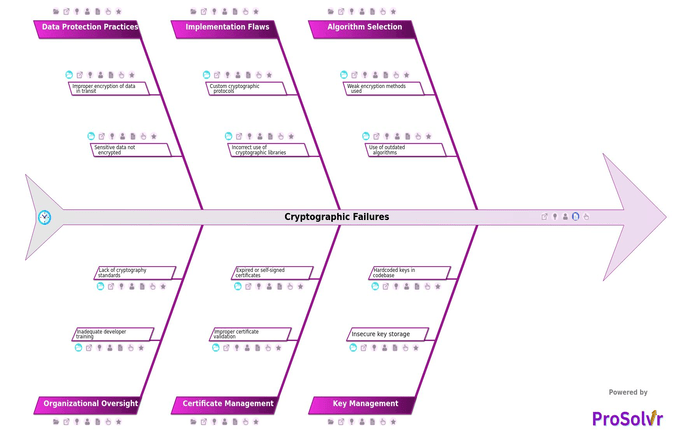
RCA of Cryptographic Failures
Cryptographic Failures Root Cause Analysis helps cybersecurity teams identify why sensitive data is not properly protected through secure encryption, hashing, certificate validation, key management, and data protection practices. These failures often begin with poor algorithm selection, such as weak encryption methods used in critical systems, symmetric encryption without key rotation, or the use of outdated algorithms. Common examples include MD5 or SHA-1 used for hashing, sensitive data not encrypted, PII stored in plaintext, improper encryption of data in transit, and lack of HTTPS on sensitive endpoints.
In cybersecurity, these issues can lead to unauthorized access, data breaches, identity theft, regulatory exposure, and loss of trust in digital systems. Many cryptographic failures are caused by weak key management, implementation flaws, and poor certificate management. Insecure key storage, keys stored in plain text, hardcoded keys in the codebase, and keys exposed in version control can allow attackers to bypass otherwise strong security controls.
Implementation flaws may include custom cryptographic protocols, non-standard design vulnerable to attack, incorrect use of cryptographic libraries, and missing initialization vectors (IVs). Certificate management problems such as improper certificate validation, no hostname verification, expired or self-signed certificates, and situations where the TLS handshake fails or is bypassed can further weaken protection for sensitive communications.
ProSolvr is an AI-powered visual root cause analysis application that helps teams investigate Cryptographic Failures through structured, GenAI-powered RCA aligned with Six Sigma principles. Using a visual fishbone diagram, organizations can examine algorithm selection, key management, implementation flaws, certificate management, data protection practices, and organizational oversight in one clear view. This approach helps uncover deeper causes such as inadequate developer training, developers unaware of secure crypto practices, lack of cryptography standards, and no policies for algorithm and key use. By moving beyond surface-level fixes, ProSolvr supports stronger Corrective and Preventive Action planning and helps prevent similar cryptographic failures from recurring.
Who can learn from the Cryptographic Failures template?
- Cybersecurity Professionals: Security analysts, incident responders, and CISOs can use the RCA to better understand how systemic weaknesses in cryptographic practices can lead to breaches. It helps them design more effective post-incident strategies and strengthen security frameworks.
- Software Developers and Engineers: Developers involved in building secure applications can learn how poor cryptographic design or implementation can lead to vulnerabilities. RCA insights guide them to follow best practices and avoid design decisions that compromise security.
- Compliance and Risk Management Teams: These teams can use the analysis to identify gaps in policy enforcement, regulatory compliance, and organizational oversight. It helps them formulate stronger controls and ensure adherence to cybersecurity standards.
- IT Management and Leadership: Technical managers and decision-makers can use RCA findings to improve resource allocation, training programs, and governance structures. It reinforces the importance of investing in secure development processes and oversight mechanisms.
- Training and Quality Assurance Teams: Educators and QA professionals can use RCA-based insights to develop training modules and quality checks that address common cryptographic failures. This helps build a more security-aware workforce and reduces the likelihood of similar errors recurring.
Why use this template?
ProSolvr is an AI-powered visual root cause analysis application that helps teams investigate Cryptographic Failures using structured fishbone diagrams and GenAI-powered RCA. Instead of treating issues such as weak encryption methods, insecure key storage, expired certificates, PII stored in plaintext, or incorrect use of cryptographic libraries as isolated technical problems, ProSolvr helps teams map them into clear cause categories such as algorithm selection, key management, implementation flaws, certificate management, data protection practices, and organizational oversight.
This structured approach helps security, compliance, engineering, and leadership teams understand what failed, why it failed, and how to prevent recurrence. By combining visual fishbone analysis with AI-powered guidance, ProSolvr can help accelerate investigation, support stronger Corrective and Preventive Action planning, and build a reusable knowledge base for future cybersecurity risks.
Use ProSolvr by smartQED to identify, analyze, and resolve cybersecurity issues in your organization with structured, AI-powered root cause analysis.


