







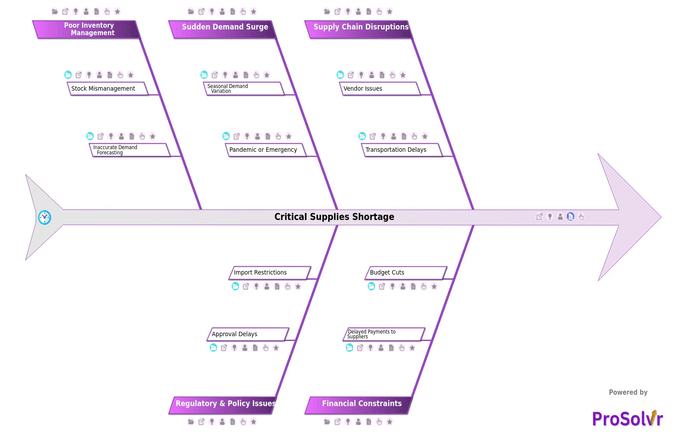
RCA of Critical Supplies Shortage
Critical Supplies Shortage in the healthcare sector refers to the unavailability or insufficient availability of essential medical items such as drugs, surgical consumables, personal protective equipment (PPE), oxygen supplies, and critical care devices when they are needed the most. Hospitals operate in a highly demand-sensitive environment, where even minor disruptions can quickly escalate into severe shortages.
This is often driven by supply chain disruptions that affect the flow of these critical items. Vendor issues such as limited supplier capacity and overdependence on a single supplier create significant risk, while transportation delays caused by fuel shortages, logistics challenges, and poor coordination further slow down delivery and increase the chances of shortages. Financial constraints also play a major role in Critical Supplies Shortage. Delayed payments to suppliers, cash flow issues, and inefficient financial approval processes can disrupt procurement cycles. Budget cuts, reduced government funding, and misallocation of available funds make it harder for healthcare organizations to maintain required stock levels.
At the same time, sudden demand surges during seasonal variations such as flu outbreaks, or during pandemics and emergencies, can quickly exhaust supplies when there is a lack of preparedness and insufficient emergency stockpiling strategies. Regulatory and policy issues further complicate access to critical supplies. Approval delays due to bureaucratic processes and lack of digital approval systems can slow decision-making, while import restrictions and trade policy changes can impact availability, especially when there is dependence on foreign suppliers.
Poor inventory management worsens the situation through stock mismanagement, manual tracking errors, and lack of standardized inventory protocols. Inaccurate demand forecasting, limited use of data analytics, and poor historical data utilization make it difficult to plan inventory effectively, increasing the overall risk of shortages and their impact on patient care.
The impact of such shortages can be severe, affecting patient safety through delayed treatments, compromised care, and increased risk of complications, while also adding operational stress on healthcare staff. Root Cause Analysis (RCA) helps identify underlying causes across supply chain, financial, regulatory, and inventory gaps, enabling targeted CAPA. A GenAI-powered application like ProSolvr further strengthens this process by mapping cause-and-effect relationships and uncovering hidden dependencies to improve long-term resilience and patient safety.
Who can learn from the Critical Supplies Shortage template?
- Hospital Administrators and Management: They can identify systemic gaps in procurement strategies, budgeting, and policy implementation, enabling better planning, resource allocation, and governance.
- Procurement and Supply Chain Teams: These professionals can understand vulnerabilities in vendor management, logistics, and supplier dependencies, helping them build more resilient and diversified supply chains.
- Finance and Accounts Departments: They can recognize how delayed payments, cash flow issues, and budget misallocation contribute to shortages, allowing for improved financial planning and timely fund disbursement.
- Healthcare Providers (Doctors and Nurses): They gain awareness of how supply shortages impact patient care and can contribute to better demand estimation, resource utilization, and escalation of critical needs.
- Inventory and Warehouse Managers: They can improve stock monitoring practices, reduce manual errors, and implement standardized inventory protocols and forecasting techniques.
- Policy Makers and Regulatory Authorities: They can understand how regulatory delays, import restrictions, and policy gaps affect supply availability, enabling them to design more responsive and healthcare-friendly regulations.
Why use this template?
ProSolvr streamlines collaboration across departments, allowing procurement, finance, and clinical teams to work together on a unified RCA framework. By accelerating analysis and improving the quality of insights, such applications empower hospitals to proactively prevent supply shortages, strengthen decision-making, and ultimately safeguard patient care.
Use ProSolvr by smartQED to systematically eliminate roadblocks in the supply chain of critical healthcare equipment, effectively safeguarding the lives of patients.


