






ProSolvr logo

Resolve problems, permanently

Root Cause Analysis for Cooling Water Contamination

RCA of Cooling Water Contamination

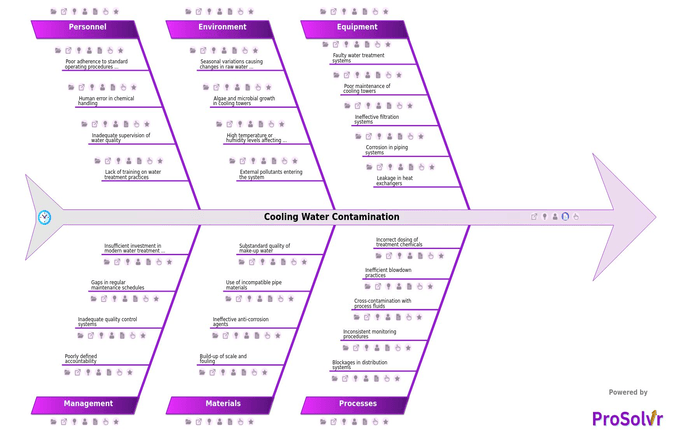
Cooling water contamination is a serious issue in petrochemical plants, often causing equipment damage, reduced efficiency, and unplanned shutdowns. ProSolvr, a GEN-AI-powered root cause analysis application, helps plants tackle these challenges by identifying the root causes of contamination. Using a fishbone diagram and Six Sigma principles, ProSolvr categorizes issues like algae growth, poor maintenance, and human errors to provide clear corrective and preventive actions, ensuring better water quality, improved equipment performance, and safer operations.

Contaminants such as suspended solids, algae, and dissolved chemicals disrupt cooling water systems by causing corrosion, blockages, and scale build-up. Faulty water treatment systems, poor cooling tower maintenance, and ineffective filtration allow these issues to persist. Seasonal changes, external pollutants, and cross-contamination with process fluids make the situation worse, while incorrect chemical dosing and substandard make-up water destabilize water chemistry further.

Human factors like lack of training, poor adherence to standard procedures, and gaps in supervision add to the problem. Management lapses, such as insufficient maintenance schedules and outdated monitoring practices, delay effective solutions. ProSolvr systematically addresses these challenges, helping petrochemical plants maintain operational efficiency, reduce downtime, and enhance safety.

Cooling Water Contamination

    • Equipment
      • Faulty water treatment systems
      • Poor maintenance of cooling towers
      • Ineffective filtration systems
      • Corrosion in piping systems
      • Leakage in heat exchangers
    • Processes
      • Blockages in distribution systems
      • Inconsistent monitoring procedures
      • Cross-contamination with process fluids
      • Inefficient blowdown practices
      • Incorrect dosing of treatment chemicals
    • Environment
      • Seasonal variations causing changes in raw water properties
      • Algae and microbial growth in cooling towers
      • High temperature or humidity levels affecting water quality
      • External pollutants entering the system
    • Materials
      • Build-up of scale and fouling
      • Ineffective anti-corrosion agents
      • Use of incompatible pipe materials
      • Substandard quality of make-up water
    • Personnel
      • Poor adherence to standard operating procedures (SOPs)
      • Human error in chemical handling
      • Inadequate supervision of water quality
      • Lack of training on water treatment practices
    • Management
      • Poorly defined accountability
      • Inadequate quality control systems
      • Gaps in regular maintenance schedules
      • Insufficient investment in modern water treatment technologies
 

Suggested Actions Checklist

Here are some corrective, preventive and investigative actions that organizations may find useful while dealing with cooling water contamination.

    • Equipment
      • Faulty water treatment systems
        • Corrective Actions:
          • Repair or replace defective components; recalibrate the system.
        • Preventive Actions:
          • Schedule periodic inspections; implement predictive maintenance.
        • Investigative Actions:
          • Review system design and past maintenance records; assess water treatment capacity.
      • Poor maintenance of cooling towers
        • Corrective Actions:
          • Clean and repair damaged components; replace degraded materials.
        • Preventive Actions:
          • Establish routine cleaning and inspection schedules.
        • Investigative Actions:
          • Examine maintenance logs for gaps; identify areas prone to neglect.
      • Ineffective filtration systems
        • Corrective Actions:
          • Upgrade or replace filters; backwash clogged filters.
        • Preventive Actions:
          • Install filtration performance monitors; ensure spare parts availability.
        • Investigative Actions:
          • Analyze filtration efficiency and the type of contaminants bypassing the system.
      • Corrosion in piping systems
        • Corrective Actions:
          • Replace corroded pipes; apply anti-corrosion coatings.
        • Preventive Actions:
          • Use corrosion-resistant materials; monitor corrosion rates.
        • Investigative Actions:
          • Conduct root cause analysis to determine corrosion sources.
      • Leakage in heat exchangers
        • Corrective Actions:
          • Seal or replace faulty heat exchanger tubes.
        • Preventive Actions:
          • Perform regular pressure tests; inspect gaskets and seals.
        • Investigative Actions:
          • Assess the design, operation, and past failures of the heat exchanger.
    • Processes
      • Blockages in distribution systems
        • Corrective Actions:
          • Remove blockages; flush and clean the system.
        • Preventive Actions:
          • Install strainers; schedule periodic cleaning.
        • Investigative Actions:
          • Identify the source of debris or sediments causing blockages.
      • Inconsistent monitoring procedures
        • Corrective Actions:
          • Reinforce consistent monitoring practices; address lapses in compliance.
        • Preventive Actions:
          • Develop clear SOPs; implement automation and alarms for critical parameters.
        • Investigative Actions:
          • Audit monitoring logs to identify patterns of inconsistency.
      • Cross-contamination with process fluids
        • Corrective Actions:
          • Isolate the contamination source; repair leaks.
        • Preventive Actions:
          • Install backflow preventers; conduct regular system audits.
        • Investigative Actions:
          • Trace contamination pathways and verify the integrity of isolation devices.
      • Inefficient blowdown practices
        • Corrective Actions:
          • Adjust blowdown rates; ensure proper execution of the process.
        • Preventive Actions:
          • Implement automation for blowdown processes; train operators.
        • Investigative Actions:
          • Review water chemistry data to assess the frequency and adequacy of blowdowns.
      • Incorrect dosing of treatment chemicals
        • Corrective Actions:
          • Recalibrate dosing pumps; re-train personnel on chemical dosing.
        • Preventive Actions:
          • Use automated dosing systems; conduct routine checks on chemical levels.
        • Investigative Actions:
          • Analyze dosing records and water quality to identify discrepancies.
    • Environment
      • Seasonal variations causing changes in raw water properties
        • Corrective Actions:
          • Modify treatment protocols to address seasonal changes.
        • Preventive Actions:
          • Monitor raw water properties regularly; develop contingency plans.
        • Investigative Actions:
          • Study historical trends in raw water quality variations.
      • Algae and microbial growth in cooling towers
        • Corrective Actions:
          • Apply biocides; clean the affected areas thoroughly.
        • Preventive Actions:
          • Install UV disinfection systems; use appropriate biocide dosing programs.
        • Investigative Actions:
          • Examine water conditions contributing to microbial growth.
      • High temperature or humidity levels affecting water quality
        • Corrective Actions:
          • Optimize cooling tower operation; install temperature control measures.
        • Preventive Actions:
          • Use heat-resistant and efficient cooling tower designs.
        • Investigative Actions:
          • Analyze temperature trends and their effects on system performance.
      • External pollutants entering the system
        • Corrective Actions:
          • Remove pollutants and clean affected areas.
        • Preventive Actions:
          • Install covers or barriers; ensure effective intake screening.
        • Investigative Actions:
          • Identify pollution sources and assess environmental control measures.
    • Materials
      • Build-up of scale and fouling
        • Corrective Actions:
          • Descale affected equipment; adjust water treatment.
        • Preventive Actions:
          • Use anti-scaling chemicals; ensure regular system flushing.
        • Investigative Actions:
          • Analyze water hardness and treatment efficacy.
      • Ineffective anti-corrosion agents
        • Corrective Actions:
          • Replace ineffective agents with suitable alternatives.
        • Preventive Actions:
          • Conduct chemical efficacy tests; train staff on proper chemical use.
        • Investigative Actions:
          • Review treatment agent specifications and performance.
      • Use of incompatible pipe materials
        • Corrective Actions:
          • Replace incompatible materials with suitable alternatives.
        • Preventive Actions:
          • Select materials based on system conditions during design.
        • Investigative Actions:
          • Evaluate system design and material compatibility.
      • Substandard quality of make-up water
        • Corrective Actions:
          • Improve pre-treatment processes; use higher-quality water sources.
        • Preventive Actions:
          • Regularly test make-up water quality; install advanced filtration systems.
        • Investigative Actions:
          • Identify quality deviations and their sources.
    • Personnel
      • Poor adherence to standard operating procedures (SOPs)
        • Corrective Actions:
          • Reinforce SOP compliance through training; address deviations.
        • Preventive Actions:
          • Conduct periodic SOP refresher training; implement audits.
        • Investigative Actions:
          • Examine cases of non-compliance and their root causes.
      • Human error in chemical handling
        • Corrective Actions:
          • Correct errors and mitigate risks; review incident reports.
        • Preventive Actions:
          • Conduct regular chemical handling workshops; use clear labels and instructions.
        • Investigative Actions:
          • Identify training gaps and procedural flaws leading to errors.
      • Inadequate supervision of water quality
        • Corrective Actions:
          • Assign qualified personnel for oversight; improve supervision protocols.
        • Preventive Actions:
          • Develop a structured supervision framework; monitor supervisor performance.
        • Investigative Actions:
          • Assess supervisor training and availability during critical operations.
      • Lack of training on water treatment practices
        • Corrective Actions:
          • Organize immediate training sessions; hire skilled professionals if needed.
        • Preventive Actions:
          • Conduct regular training programs; assess staff competencies periodically.
        • Investigative Actions:
          • Review past training modules and feedback.
    • Management
      • Poorly defined accountability
        • Corrective Actions:
          • Assign specific roles and responsibilities; document accountability protocols.
        • Preventive Actions:
          • Implement a clear organizational structure; establish performance reviews.
        • Investigative Actions:
          • Audit accountability frameworks and identify gaps.
      • Inadequate quality control systems
        • Corrective Actions:
          • Revise and strengthen quality control measures.
        • Preventive Actions:
          • Install automated QC systems; conduct regular audits.
        • Investigative Actions:
          • Examine historical data for trends of system inadequacies.
      • Gaps in regular maintenance schedules
        • Corrective Actions:
          • Address missed maintenance tasks immediately; reschedule overdue work.
        • Preventive Actions:
          • Use CMMS software to manage schedules; ensure proper resource allocation.
        • Investigative Actions:
          • Analyze root causes of missed maintenance and system downtime.
      • Insufficient investment in modern water treatment technologies
        • Corrective Actions:
          • Allocate funds for upgrading technologies; prioritize critical investments.
        • Preventive Actions:
          • Conduct regular assessments of technology needs; create a future-focused budget.
        • Investigative Actions:
          • Evaluate historical investment decisions and their impact on system performance.
 

Who can learn from the Cooling Water Contamination template?

  • Maintenance Teams: Maintenance teams can learn the importance of regular inspections and proactive maintenance to prevent issues such as corrosion in piping systems and leakage in heat exchangers, ensuring long-term system reliability. They can also improve maintenance schedules based on gaps identified through the RCA.
  • Operations Personnel: Operations personnel can gain insights into following standard operating procedures (SOPs) more consistently and improving chemical handling practices. This helps reduce errors such as incorrect dosing of treatment chemicals and inconsistent monitoring of cooling water systems.
  • Water Treatment Specialists: Specialists can understand the importance of maintaining effective filtration systems and upgrading water treatment technologies. The RCA highlights how faulty treatment systems, scale build-up, and fouling can affect cooling water quality and system performance.
  • Environmental and Quality Teams: These teams can learn how seasonal changes, external pollutants, and other environmental factors influence cooling water quality. The RCA supports the development of stronger monitoring practices and contingency plans to maintain compliance and operational standards.
  • Management and Decision-Makers: Management can understand how poorly defined accountability, inadequate quality control, and insufficient investment in modern technologies contribute to operational failures. The RCA reinforces the need for effective governance, resource allocation, and preventive planning.
  • Training and Development Coordinators: Training teams can identify knowledge gaps related to chemical handling, water quality supervision, and treatment practices. These insights help develop targeted training programs that improve employee competence and reduce the likelihood of recurring issues.

Why use this template?

The insights gained from a root cause analysis can be pivotal for developing corrective and preventive actions (CAPA). For instance, identifying substandard quality of make-up water as a root cause might lead to corrective measures like upgrading pre-treatment systems and preventive actions like enhanced monitoring protocols. By leveraging GEN-AI to streamline the root cause analysis process, petrochemical plants can ensure comprehensive problem resolution and foster a culture of continuous improvement.

Empower your team to tackle challenges in your organization with precision and confidence — start with ProSolvr by smartQED.

Curated from community experience and public sources:

  • https://realtechwater.com/applications/industrial-water/cooling-water-contamination/
  • https://www.sciencedirect.com/topics/earth-and-planetary-sciences/cooling-water
